
The grammar of the ninth wall
Portrait framing didn't remove the fourth wall — it added a new one, centimetres from the viewer's face. The strongest vertical drama is being written against it.
Listen to this story
Audio edition
Call it the ninth wall: the invisible plane a portrait screen puts between a held phone and a held gaze. It sits closer than any proscenium in the history of performed story — closer than cinema, closer than television, closer than theatre in the round. Vertical drama is the first dramatic form staged inside personal space.
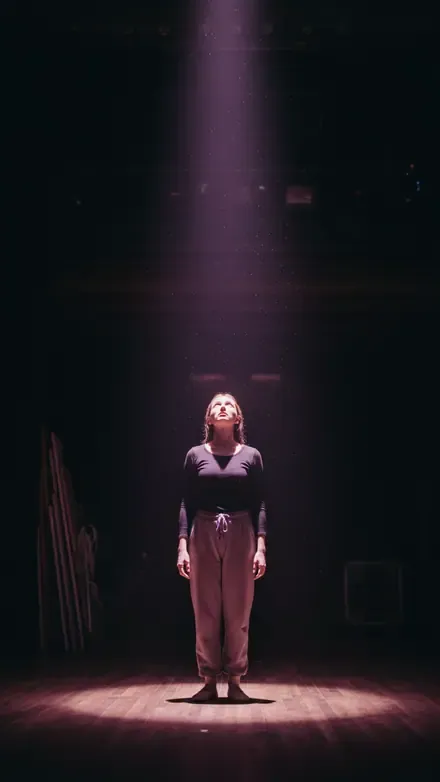
Performance changes first. At that distance, projection reads as lying. The vertical actors being talked about this year all share a register — the scaled-down, camera-trusting stillness that film acting took forty years to learn, arrived at in one production cycle because the format punishes anything else instantly. Watch The Understudy’s lead in her audition scenes: the performance happens between the lines of her face, because on a held phone the audience is near enough to read them.
Blocking changes next. The portrait frame holds one person comfortably, two people intimately, three people as composition. This is not a limitation; it is a casting of every scene’s power dynamic. Who shares the frame is the scene. The formats’ best directors storyboard conversations like duels — entrances into the rectangle are events.
Writing changes last, and most deeply. Dialogue written for across-the-room television over-explains at ninth-wall distance. The format’s native line is short, oblique and load-bearing, trusting the proximity to carry subtext. The writers coming out of poetry and playwriting are adapting faster than the ones coming out of procedurals, and the reason is the wall: they already write for rooms where the audience can see everyone breathe.
The portrait frame holds one person comfortably, two people intimately, three people as composition. Who shares the frame is the scene.
Sound sits inside the wall too, and almost nobody talks about it. A held phone is as close to the ear as it is to the eye — most viewing happens on headphones, in transit, in rooms the production doesn’t control. The mix that works is nearer to radio drama than to television: voice forward, silence structural, effects used the way a close-up is used. When Fault Line wants dread, it doesn’t score it; it lets the room tone of the hearing chamber sit under a witness’s pause. On a train platform, through earbuds, that pause lands physically.
There is also a viewer’s half of the contract. The ninth wall is the first fourth wall the audience can touch — the same glass carries their messages, their bank, their family. Drama arriving on that surface borrows an intimacy no cinema screen ever had, and it can spend that intimacy or abuse it. The series that are building loyal audiences treat the interruption as a given (life happens mid-episode) and design re-entry into the grammar: cold re-openings that re-seat you in one shot, recaps that are a look rather than a montage. The ones that churn treat the phone like a small television and wonder why the audience treats them like an app.
None of this is theory for its own sake. Commissioners keep asking what separates vertical drama that travels from vertical drama that churns. The answer, mostly, is whether the production understood which side of the ninth wall it was performing on — and what it costs to be let through it.